Featured Development: YWCA Yakima - Rocio's Place

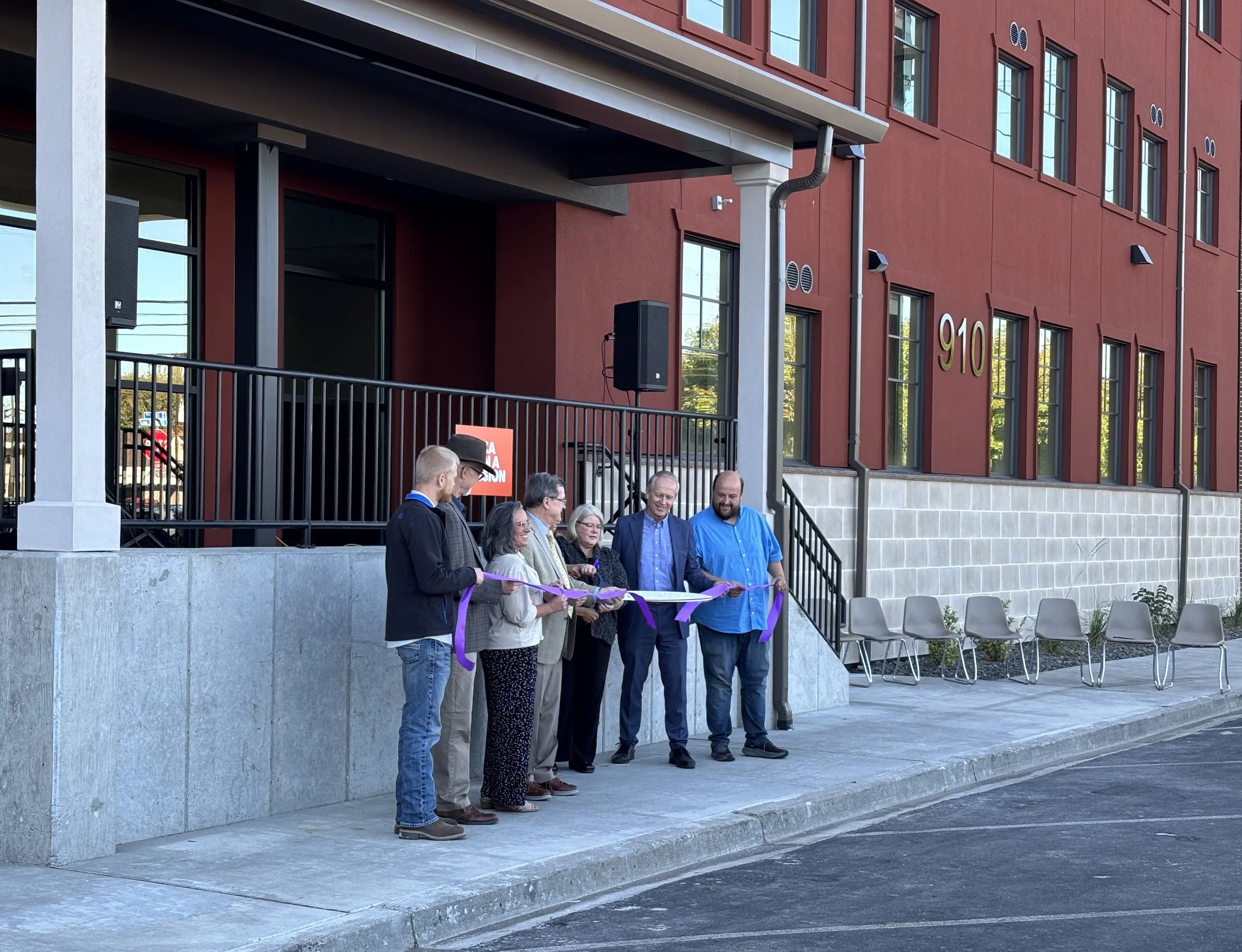
YWCA Yakima CEO cheri kilty cuts the ribbon at the opening ceremony for rocio’s Place on Wednesday, September 16, 2026 in yakima.

For too long, the YWCA Yakima has had to turn away more than 400 families per year due to capacity issues at their original domestic violence shelter. As the need for more emergency shelter space grew apparent, CEO Cheri Kilty took it upon herself to start the wheels in motion.

“Cheri had already started development on her own… she’s a go-getter and she’s an action person,” said Isabel Garcia, Deputy Director of Housing Development at ORFH. “She’s amazing to work with.”

Before long, Kilty’s plans were rewarded with a generous offering: Hogback Development, a Yakima-based company, made a donation to the YWCA in the form of the building that would house their next shelter: the former St. Elizabeth Nursing School building, located only a half-block from the current YWCA facility.

With development ready to begin in earnest, Kilty approached ORFH’s Executive Director, Marty Miller, and Director of Housing Development, Korbie Jorgensen Haley, with the vision for the shelter. After that, Garcia was designated as ORFH’s lead staff for the development.

Even with the evident community need, funding for the project wasn’t exactly easy to come by – a theme that most affordable housing developers are all too familiar with.

“So, we started with applying for Housing Trust Fund. We were declined 3 times, but we didn’t give up,” said Garcia. In addition to their application efforts, Kilty and Garcia met with representatives and senators in Olympia and were able to secure an $8.4 million allocation for the shelter, supported by Senator Curtis King.

Other funds trickled in as time went on, including a loan from Heritage Bank and funds from both Yakima County and the City of Yakima.

“The YWCA also started working on a capital campaign,” said Garcia. “Then we kept applying every year for more direct allocation. Every penny counts.”

Once the project had a solid stack of capital, construction started, and modifications and rehabilitation began to bring the building up-to-speed for its intended use. The original building served as a dormitory for nursing students, making the layout ideal for shelter bedroom spaces. The new facility also features communal kitchens, playrooms for children and common areas for staff training and other events as needed.

The new shelter, known officially as Rocio’s Place, will operate in tandem with the YWCA’s existing shelter.  A ribbon cutting celebration for the completed shelter took place on Wednesday, September 16 at 10:00 a.m. It was well attended, with broad community support.

Above all, Garcia said she is grateful for all the local cooperation and every effort to support Rocio’s Place. Their website states that the YWCA Yakima is less than $300,000 away from reaching their capital campaign goal, thanks to generous community donations.

“I’m definitely grateful for the giving community that we have in Yakima. We are so giving, and so ready to do something about [domestic violence], so that’s what excites me. Especially to keep them [the families] safe and improve their quality of life,” Garcia said.
Featured Development: Othello Housing Authority - Rocky Point

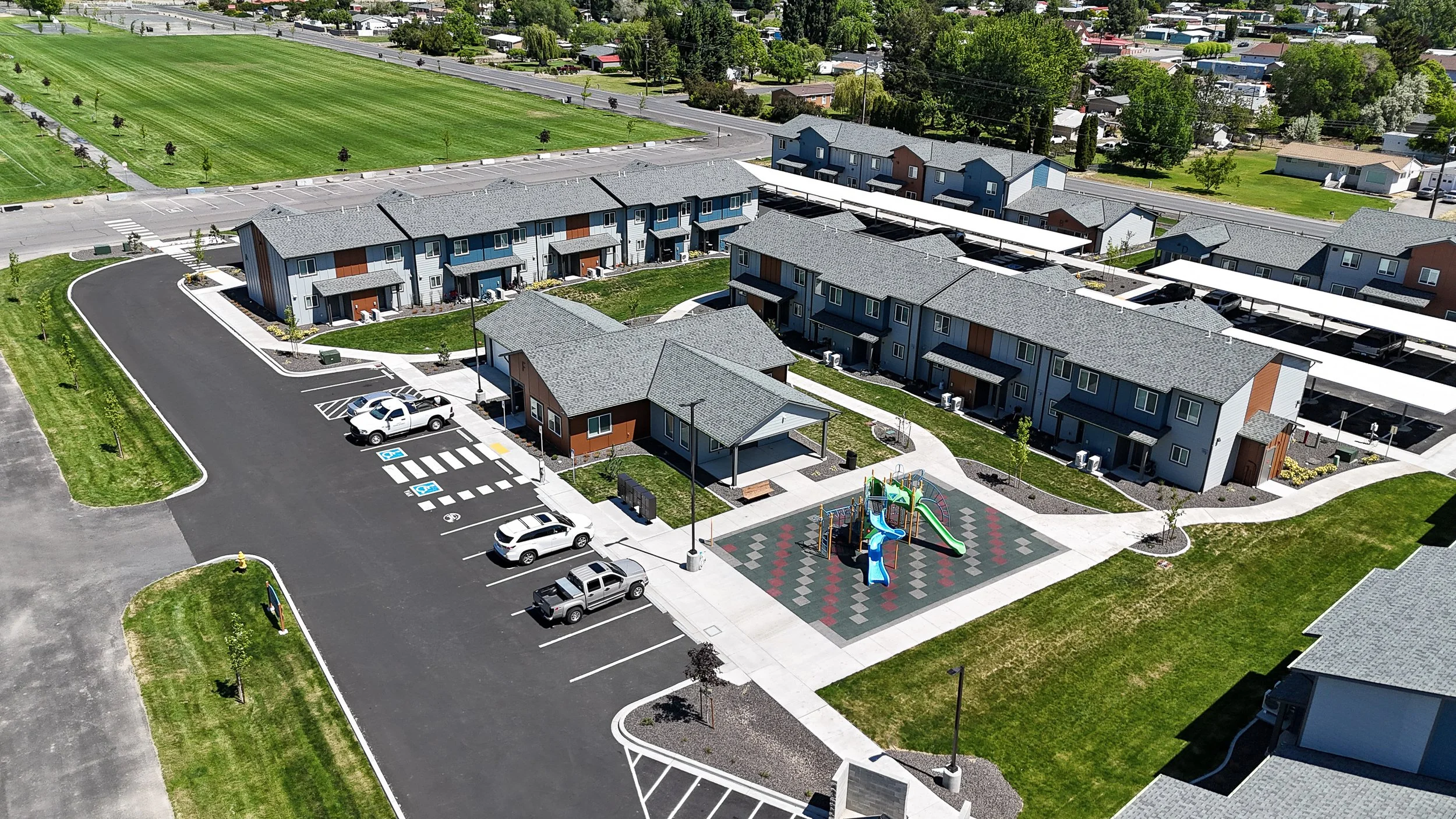
Image courtesy of M.C. Lundgren

For Cristina Alvarez Ruiz, farmworker housing is not just merely a good thing to have – it’s essential. The Senior Housing Developer at ORFH grew up with a love of the land; her family has farmed in the Yakima Valley for more than 50 years. So, when the opportunity came up to make sure that more stable housing for farmworkers and their families was built, she jumped right in with both feet.

“I personally have a passion – for farmworkers, for agriculture, for basically what feeds our community, or provides food on our table. And I think that’s what led me to ORFH and ultimately, I think that’s what Marty [Miller, Executive Director of ORFH] just thought - put her on all these farmworker projects - because she’s passionate about farming, about farmworkers, about agriculture,” said Alvarez Ruiz.

The latest such project, the Rocky Point housing development in Othello, arrived on Alvarez Ruiz’s radar before the Coronavirus pandemic. In 2019, the Othello Housing Authority was looking for their next affordable housing build site. The owner of a 10-acre plot of land approached them – are you interested in buying? Angelina Gomez, the former Executive Director of the Othello Housing Authority, moved quickly on the prospect. But despite the enthusiasm, the deal didn’t happen quite as planned.

“Back in 2019 we were talking to the landowner of this property, and he decided that, you know, he didn’t like the terms that we had so we dropped it,” said Gomez.

“Well, the appraisal came in lower than what the purchase and sale agreement was at,” said Alvarez Ruiz. “And we had to go back to the owner, or the seller, and say sorry but as a Housing Authority they cannot pay more than what it’s appraised for.”

After the deal fell through, plans stalled but communications between ORFH and the Othello Housing Authority continued. Then, in 2020, after the pandemic moved everyone to home offices, the project caught a break.

“Fast forward six months, the seller comes back and says, ‘Hey the [other] deal is off the table, are you still interested?’ And we said if you’re interested in selling, at the appraised price, yes,” said Alvarez Ruiz, adding, “And that was such a whirlwind because then when he came back, he said we need to close like, by tomorrow. And we were scrounging around trying to secure our financing.”

As with most affordable housing developments, funding came from multiple sources. For the land, ORFH and the OHA utilized what is known as a LAP Loan; Land Acquisition Program, offered through the Washington State Housing Finance Commission.

But as anyone in development could tell you, closing on the site is just the first step in a years-long process.

“After we had secured the site then we said we need to go out for the actual funding for the construction and development of the site,” said Alvarez Ruiz.

Years of challenges, obstacles and even some pushbacks ensued. While the community in Othello was accepting, even understanding of the need for more farmworker housing, the project faced bureaucratic delays ranging from zoning issues to water and sewer connection miscommunications.

The project was also dedicated to serving a targeted AMI – Area Median Income - population of 30% - a number that some tax credit investors, Alvarez Ruiz said, find hard to meet.

Despite those concerns, Rocky Point has had no issues finding tenants.

“You know, everybody's coming. We have applicants coming in, hey, we want one of those new apartments. And it's like, ah, we have a long waiting list for that. [We are] fully occupied,” said Gomez.

A Phase II development for the site is planned, with more units in mind for the rest of the 10-acre plot.

“It is in the works… like with any development project we have our work cut out (for us),” said Alvarez Ruiz, “and there is challenges and obstacles that we’re going to face but I think that’s the type of work that we do that’s so unique. With the type of work that we do there’s always that level of optimism that we have to maintain.”

Featured Developments: YNHS - Vecino Apartments, Neighborhood Apartments

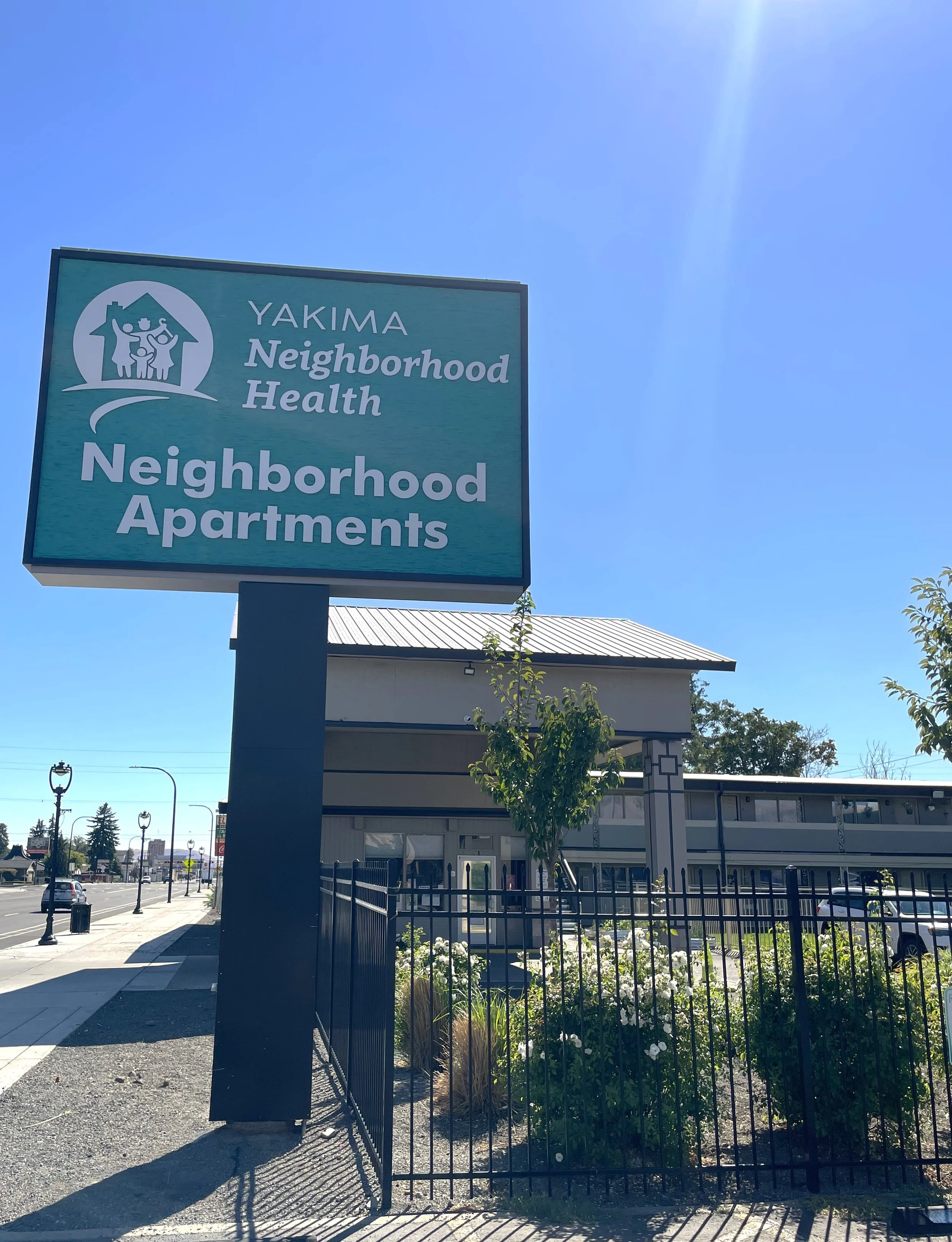
Neighborhood Apartments, pictured here, is a permanent supportive housing development owned and operated by Yakima Neighborhood Health Services.

For most, a motel is a temporary stop away from home – the original respite for road trippers across the country. In recent years, out-of-commission motels have found new life as permanent supportive housing for communities facing a lack of resources to assist the chronically homeless or disabled. Two such examples already exist in Yakima, both owned and operated by Yakima Neighborhood Health Services.

In 2022, Yakima Neighborhood Health Services hired ORFH to help acquire the 1st Street motel formerly known as the Yakima Valley Inn. The funds used for the $2.7 million acquisition had been set aside by the State to support such projects, and the 58 units the former inn would add in support of housing for those experiencing homelessness was “a significant number for the town of Yakima,” said Doug Bommersbach, Housing Developer at the Office of Rural and Farmworker Housing (ORFH).

The development of more permanent supportive housing in Yakima was a crucial element of the homeless response led by Neighborhood Health.

“We delved into the world of housing because we recognized that housing is an essential component to improving people's health,” said Rhonda Hauff, CEO of Yakima Neighborhood Health Services. “And when we had the opportunity to reach out to our unhoused populations, we recognized that in order to contribute to the dearth of housing, that we needed to – that we could contribute to that by getting into becoming supportive housing providers ourselves.”

ORFH and Neighborhood Health first partnered in 2010 on what is now known as the Rhonda D. Hauff Resource Center, a former supermarket on Sixth St. that provides temporary housing and services for the homeless. The partnership continued for the Yakima Valley Inn project, now known as Neighborhood Apartments.

 Bommersbach, who came onto the project in the middle of construction, noted that the existing structure did bring its own set of challenges.

“The challenges were just, you know, it was kind of overwhelming that it’s an old motel and it needed a lot of upgrading,” Bommersbach said. “But they [Neighborhood Health] did a good job on tackling all those issues and getting it improved quite a bit.”

Upgrades included fixing a leaky roof, mending flood damage and adding insulation, security features, landscaping and more. Some of the improvements are ongoing, as just this year more funding was approved by Washington State’s Housing Preservation Program.

“… I’m just waiting for [the Department of] Commerce to give me the go ahead to close on this and get going on this – it’s kind of a limited scope of work it’s just the stairs, roof and the gutters but it will make a big difference in the envelope of the building and protect everything,” said Bommersbach.

With the successful renovation of Neighborhood Apartments under their belt, Neighborhood Health quickly made plans for another permanent supportive housing project, using the same model – purchasing and updating a former motel.

The former Motel 6, located on Staff Sgt. Pendleton Way, was acquired in early 2024. The building offers 39 units for permanent supportive housing, 20 of which were earmarked for young adults ages 18 – 24. The location also includes support from onsite case managers to connect residents with various health and social services. Improving the health and self-sufficiency of those they serve has long been a priority for Neighborhood Health.

“…We have a strong team who are well-trained in trying to reduce barriers and promote improved health and strengthening vocational training and employment possibilities,” said Hauff.

At Motel 6, now known as Vecino Apartments, additions were made to the structure to support the services offered and to help encourage community engagement. A community center was built on the property, complete with a new kitchenette.

“So, they have a beautiful kitchen with a nice open view, a nice [kitchen] island. The community space has all these… tables for people to gather and eat,” said Jose Farias, Housing Developer with ORFH. “There’s also 3 offices for any kind of case management that needs to happen. We did provide a playground because we are serving families with children, so they got an awesome playground,” said Farias

Although renovating these existing structures comes with its challenges, namely a fierce competition for funding, Neighborhood Health has no plans to stop anytime soon.

“We’re hopefully going into a new project very soon and you know, renovating existing buildings, which tends to be what we do well,” said Hauff.

Despite the challenges, the success stories are numerous, and those provide the lasting impact that keep Neighborhood Health, and ORFH, invested in the work.

“That’s just it [what has had the biggest impact], is hearing the success stories from our staff,” said Hauff. “And the other thing I would say is seeing the reduced number of unhoused people in our community – this is our community, and we have fewer people on the streets and that has had a huge impact on me.”